
A Plumas-Eureka History Day Beyond the Museum
A self-guided history day at Plumas-Eureka State Park: stamp mill ruins, mining trails, a historic ski bowl, and Graeagle's own mill-town story.
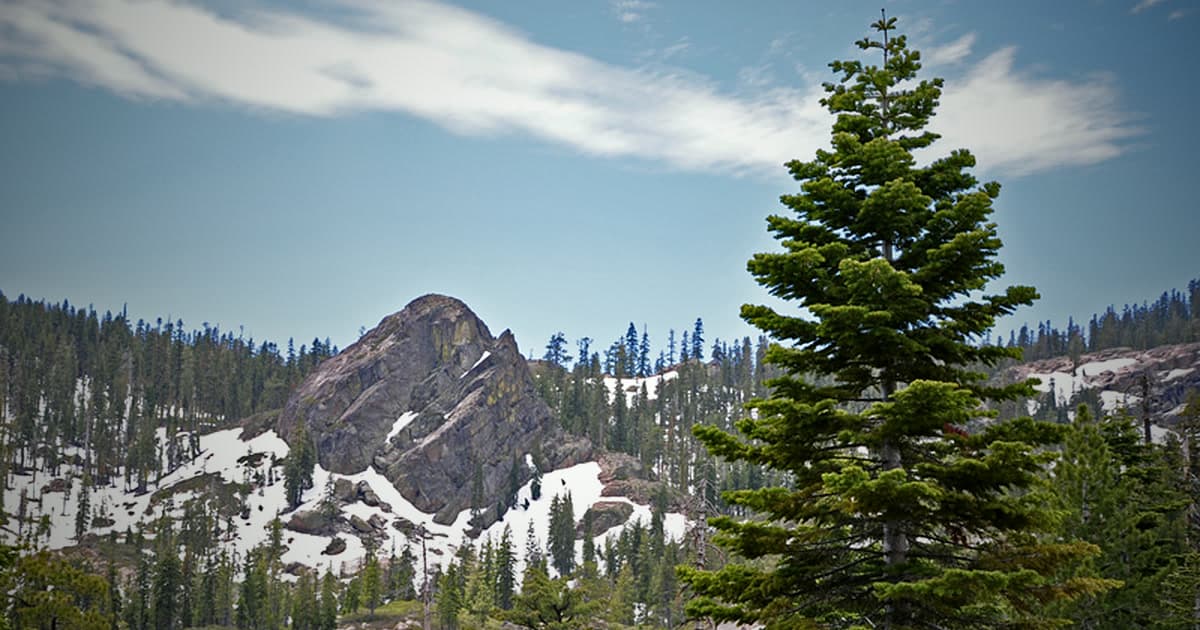
Quick answer: Plan a full day around Plumas-Eureka State Park, about five miles west of Graeagle on County Road A-14 (also signed as the Graeagle-Johnsville Road), and treat the indoor museum as one stop among several rather than the whole visit. The real history sits in the cluster of original mine buildings across the road from the museum, in two trails that climb through the old mining ground, and at the Eureka Ski Bowl, where the park and county tourism office both date competitive ski racing in the Western Hemisphere back to 1861. Confirm hours before you drive out: the historic buildings run on a short visitor season and shift to a special-events-only schedule once that season ends each fall.
The real history sits across the street from the museum
Most visitors walk into the Plumas-Eureka museum, housed in what was originally the miners' bunkhouse, and treat that as the whole destination. It is a reasonable first stop: inside are natural history exhibits, archaeological finds, mining artifacts, and a working scale model of the stamp mill. But the museum building is also the visitor center and park office, and the actual historic mining complex sits across County Road A-14 from it. That outdoor area includes the Mohawk Stamp Mill, the smaller Bushman five-stamp mill, a stable, the old mine office, the Moriarty House, and a blacksmith shop moved here from the Gaston Ranch in 1961.
The Mohawk Mill is the centerpiece. It was built at a cost of about $50,000 (the park's official website lists a construction year of 1876, while a California State Parks interpretive handout for the same site gives 1878, and as of this writing the two documents have not been reconciled). At full operation it ran 60 stamps, each weighing 600 to 950 pounds and dropping eight and a half inches roughly 80 times a minute to crush ore into fine sand. A partial restoration was completed in 1962 at a cost of about $50,000, and two batteries of the original stamps remain in place. Docents and park staff lead tours of the buildings and run blacksmithing demonstrations during the summer visitor season.
The Moriarty House shows the domestic side of the same story. It held a kitchen, parlor, bedroom, and dining room, and the family's children reportedly climbed a ladder from the parlor to an attic to sleep, since the house was too small to hold separate bedrooms for everyone.
The gold strike that started it all
The entire complex traces back to May 23, 1851, when a group of nine prospectors camped along Jamison Creek found a rich quartz outcropping on the east side of what they then called Gold Mountain, now Eureka Peak. The discovery eventually grew into more than 30 miles of mine shafts, worked first by individual claim holders and later by British mining companies that refined the extraction methods. By 1888, 173 men worked underground and another 12 in the mill. By the time mining wound down for good in the 1940s, the Mohawk Mill alone had processed more than $8 million in gold pulled from 65 miles of tunnels. Jamison City, the original tent camp, appeared in 1853, and a small year-round community still lives inside the park boundary today.
Two trails that turn the history into a hike
For visitors who want to see the mountain that produced all of this, two marked trails leave from the historic area.
| Trail | Distance | What to expect |
|---|---|---|
| Eureka Lake Trail | 4.3 miles round trip | A moderate out-and-back to Eureka Lake, with views back toward Eureka Peak; the route continues past the lake for hikers aiming for the ridge. |
| Jamison Mine Trail (also called Jamison Creek Trail) | 6.2 miles round trip | Follows Jamison Creek past old mine sites and climbs into the Lakes Basin trail network. |
| Jamison Canyon Ski Trail | 2.5 miles, groomed in winter | A cross-country loop that starts and ends near the museum. |
Elevation runs from about 4,720 feet at the visitor center and campground up to 7,447 feet at the summit of Eureka Peak, so pack layers even in midsummer. For a longer day that strings together several of the area's alpine lakes, see our Gold Lake Basin day trip guide.
The ski bowl with a claim to a world first
Drive to the end of the park road and you reach the Eureka Ski Bowl, also called the Johnsville Historic Ski Bowl. California State Parks and the Plumas County tourism office both date the first organized, prize-awarding ski race in the Western Hemisphere to 1861, raced on longboards: 12-foot Norwegian-style skis that could weigh up to 20 pounds and were steered with a single long pole used as a brake. On straight courses, racers reportedly topped 80 miles an hour. The park's own interpretive materials add a second claim: the gravity-powered ore buckets that hauled miners up the mountain in winter may have doubled as the first ski lift anywhere.
That history is not locked behind glass. The nonprofit Plumas Ski Club revives it every winter with the Longboard Revival Race Series, held on the third Sunday of January, February, and March at the ski bowl, with competitors in 1860s dress racing on 9- to 16-foot wooden skis. It is open to spectators and new racers, snow permitting.
What's actually open when you visit
This is worth checking before you drive out, since the schedule moves from year to year. According to the park's own status page, last checked October 9, 2026, day-use access to the grounds runs sunrise to sunset year-round. The campground closed for the season on September 8, 2026, and the museum and historic-area buildings were open only for the weekends of September 11 through 13 and September 18 through 20; starting September 21, 2026, the museum and venue buildings switched to a special-events-only schedule pending winter program announcements. In a typical year the museum and camp store run from Memorial Day weekend through Labor Day weekend, with limited hours the rest of the year, but confirm current dates on the park's official page linked below rather than relying on this article once more than a few weeks have passed. Dogs are allowed on fire roads only, not on most trails, and are excluded from the groomed Nordic ski trails from November 1 through May 1 whenever snow is present. An accessible, paved picnic area sits about 0.2 mile from the museum along County Road A-14, and the museum's interior exhibits and single-user restroom have been modified for accessibility.
Basing a history day out of Graeagle
Plumas-Eureka State Park sits about five miles from Graeagle via County Road A-14, close enough to treat the whole outing as a half-day loop rather than a separate trip. A family cabin in Graeagle with a full kitchen and a wraparound deck works well as a base: pack a picnic for the accessible tables near the museum, walk the mining complex and one trail in the same outing, and still be home for dinner on the deck. Graeagle itself grew up as a lumber company town, and its own mill-pond streets add a second, later chapter to the same mountain-industry story once you are back in town. For more stops around the valley, our guide to Graeagle's hidden gems covers other less obvious options nearby.
Quick answers
How far is Plumas-Eureka State Park from Graeagle?
About five miles via County Road A-14, which the park also describes as five miles west of Blairsden.
Is the museum open year-round?
No. The museum and camp store typically run from Memorial Day weekend through Labor Day weekend with limited hours the rest of the year, and the park's status page, checked October 9, 2026, shows the historic buildings moving to a special-events-only schedule after September 21, 2026. The park grounds themselves stay open for day use sunrise to sunset year-round.
Can you reach mining history outside the historic area on foot?
Yes. The Jamison Mine Trail follows Jamison Creek past old mine sites for about 6.2 miles round trip, and the shorter Eureka Lake Trail, 4.3 miles round trip, climbs toward the peak the miners once called Gold Mountain.
Are dogs allowed at Plumas-Eureka State Park?
Dogs are permitted on fire roads but not on most trails, and they are excluded from the groomed Nordic ski trails between November 1 and May 1 whenever snow is on the ground.
What is the Longboard Revival Race Series?
It is an annual recreation of 1860s-style ski racing, hosted by the nonprofit Plumas Ski Club on the third Sunday of January, February, and March at the Eureka Ski Bowl, with competitors in period dress racing on 9- to 16-foot wooden skis.
Sources
- Plumas-Eureka State Park (California State Parks)
- Plumas-Eureka State Park interpretive guide (PDF) (California State Parks)
- Plumas-Eureka State Park (Plumas County Visitors Bureau)
Image credit: Rick Cooper, CC BY 2.0. Original image. License. Cropped and color-adjusted.

More from the Journal
Which Lakes Basin Lake Fits Your Day?
A Graeagle-area guide to Gold Lake, Long Lake, Bear Lakes Loop, and Goose Lake, with 2026 hours, fees, and driving distances for the Lakes Basin.
Lakes Basin Hikes for Mixed-Ability Families
A practical guide to Lakes Basin's easiest family hikes near Graeagle, from paved overlooks to short lakeside loops for all ages and abilities.